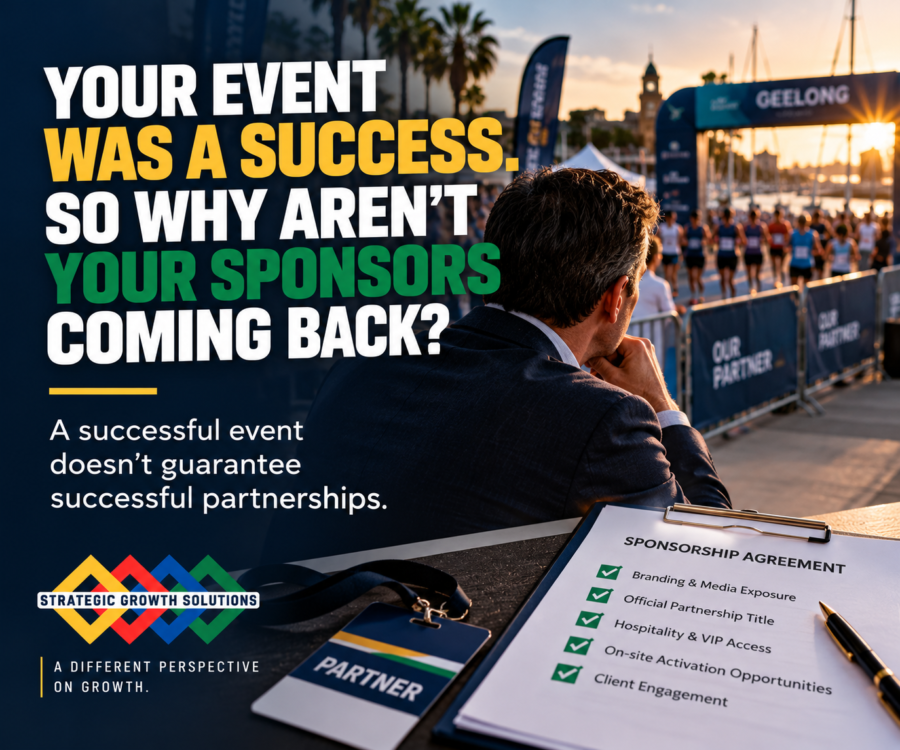
A successful event doesn’t guarantee successful partnerships.
I’ve spent many years working in sports sponsorship, motorsport and commercial partnerships, and there’s one aspect of the industry that continues to frustrate me: the way some event organisers treat their sponsors once the contracts are signed and the money has been received.
Recently, I’ve had conversations with businesses that supported major events in Geelong. Some described sponsorship benefits that weren’t delivered, agreed partnership titles that weren’t used in media communications, and a general lack of attention to the commercial relationships that helped make those events possible.
It’s disappointing to hear, particularly when these businesses have invested their money, resources and reputations in supporting an event.
And it highlights something I’ve been advocating for years.
The sponsorship deal doesn’t end when the money arrives. That’s when the relationship begins.
One of my eight golden rules of sports sponsorship has always been that once a sponsor has committed to supporting your event, you treat them like royalty.
Not because they’re doing you a favour, but because they’ve made a commercial investment in your event and placed their trust in your organisation to deliver value.
That investment deserves to be respected.
Sponsorship Is Not a Donation
One of the biggest mistakes an event organiser can make is treating sponsorship revenue as money received rather than an investment that needs to generate a return.
A sponsor isn’t simply purchasing signage, hospitality tickets or a logo on an event website.
They’re investing in opportunities to achieve business objectives. That might include brand awareness, customer acquisition, sales, relationship development, community engagement or access to new markets.
Every benefit in a sponsorship agreement should contribute towards those objectives.
And once those benefits have been agreed upon, delivering them is not optional.
If a business has negotiated the title of Official Automotive Partner, for example, then that’s how it should be referred to in the agreed communications.
Not simply as a sponsor. Not as a supporter. And certainly not omitted when its partnership category should be acknowledged.
Partnership titles have commercial value. They communicate a business’s position, association and level of involvement with an event.
Getting them wrong might seem insignificant to an organiser juggling hundreds of operational responsibilities, but to the business paying for that association, it matters.
Never Promise What You Cannot Deliver
Another principle I’ve always maintained is simple:
Never agree to a sponsorship benefit that you cannot 100% guarantee you can deliver.
It’s easy to get carried away during negotiations, particularly when an organiser is trying to secure the funding needed to stage an event.
Additional media exposure gets promised. Special access is offered. Brand integrations are agreed upon. Opportunities are added to the proposal to make the package more attractive.
But who’s responsible for delivering them?
Has the media team been briefed? Does the event actually control the promotional channels involved? Have the operational staff been informed? Is the promised access even possible?
If you cannot confidently answer those questions, you shouldn’t be offering the benefit.
And where delivery depends on a third party, don’t represent it as guaranteed unless you have the necessary agreement in place.
A smaller sponsorship package delivered exceptionally well is worth far more to a long-term commercial relationship than an impressive proposal filled with promises that never materialise.
Treat Your Sponsors Like Royalty
When I say sponsors should be treated like royalty, I’m not suggesting expensive gifts, lavish hospitality or unnecessary special treatment.
I’m talking about professionalism, attention, communication and genuine appreciation.
Make them feel involved. Keep them informed. Understand what they’re trying to achieve. Introduce them to relevant people. Look for additional opportunities to create value.
And most importantly, make sure someone within the organisation takes ownership of delivering their partnership.
A sponsor should never have to chase an organiser to ask why an agreed benefit hasn’t appeared, why their branding is missing or why their official title wasn’t used.
Those details should be managed proactively.
In fact, the best sponsorship managers don’t simply deliver what’s written in the contract. They’re constantly looking for additional ways to help their partners succeed.
That’s how commercial relationships evolve from annual sponsorship agreements into valuable long-term business partnerships.
The Event Might Be Successful. The Partnership Might Not Be.
Here’s the part that event organisers need to understand.
You might have record attendance, fantastic media coverage, outstanding participant feedback and a financially successful event.
From the outside, everything looks brilliant.
But what happens when the sponsors sit down afterwards and assess their return on investment?
Did they receive everything they paid for?
Did the organiser understand their business objectives?
Were their representatives properly looked after?
Did the partnership deliver meaningful commercial value?
And perhaps the most important question:
Would they invest again?
Because if the answer is no, the event’s apparent success may be masking a serious commercial problem.
Replacing dissatisfied sponsors every year is expensive, time-consuming and completely avoidable.
Long-term partners provide much more than funding. They bring stability, industry connections, promotional reach, operational resources and the confidence to plan future events.
Lose those relationships, and you’re not just losing sponsorship revenue. You’re losing part of the foundation that makes an event sustainable.
Your Next Sponsorship Deal Starts the Day You Deliver the Current One
I have always believed that the strongest sponsorship renewal strategy begins the moment the original agreement is signed.
Not three months before the next event.
Not when the organiser realises the sponsorship budget needs replenishing.
And certainly not after the sponsor has spent months wondering whether anyone appreciated their involvement.
A well-managed partnership should make renewal a natural commercial decision.
The sponsor knows what they’ve achieved. They understand the value. They trust the organiser. And they can see opportunities to build on the relationship.
That’s the position every event organiser should be working towards.
Because ultimately, sponsorship isn’t about convincing a business to hand over money.
It’s about creating a relationship in which both organisations benefit from each other’s success.
If you want sponsors to invest in your event for the long term, start by showing them that you consider their investment worth protecting.
An event’s success shouldn’t be measured only by what happens on event day.
It should also be measured by how many commercial partners want to be part of it again next year.
